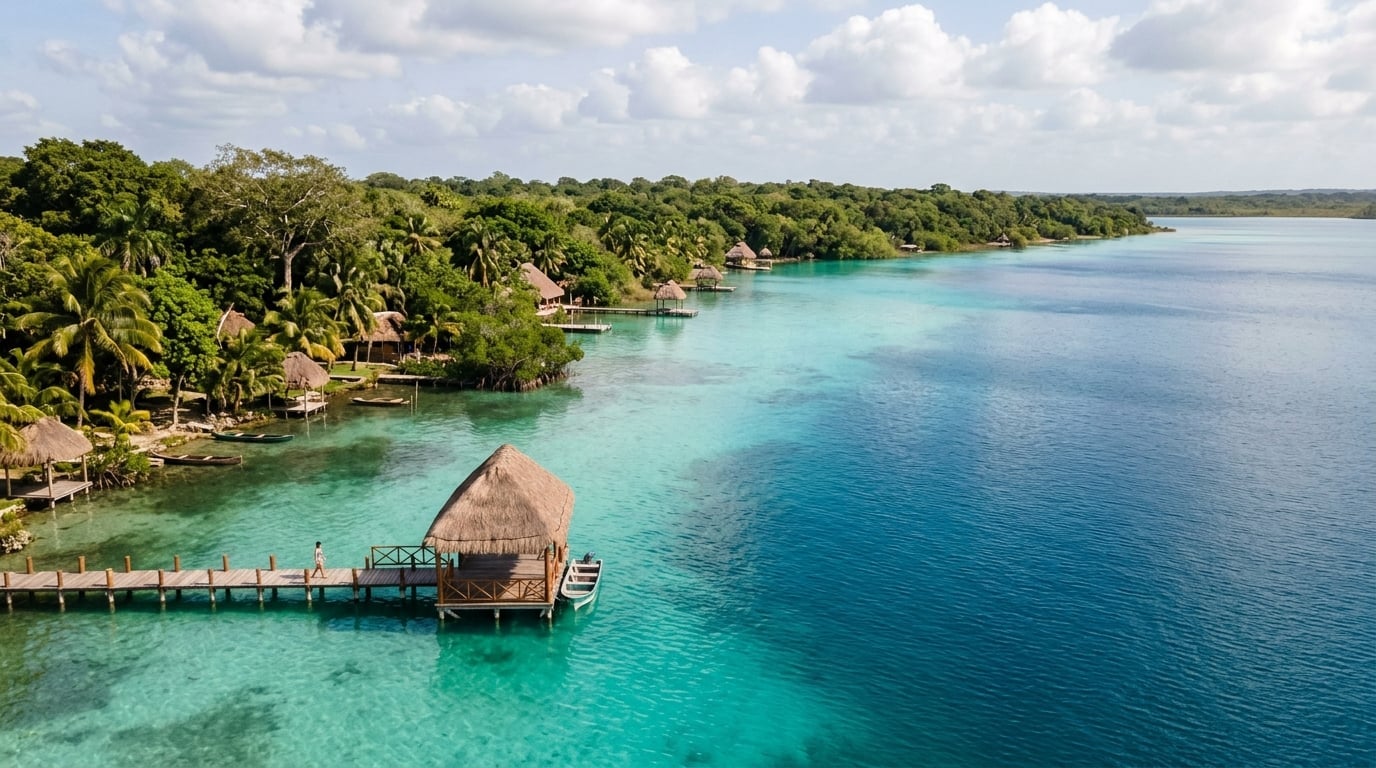
Laguna Bacalar: A Place Where History and Nature Meet
Few places in Mexico feel as timeless as Laguna Bacalar. Known around the world as the Lagoon of Seven Colors, this stunning body of water in southern Quintana Roo is more than just a beautiful destination. It is a place shaped by ancient geology, Maya trade routes, colonial conflict, pirate raids, and a modern rediscovery as one of the most magical places to visit in the Mexican Caribbean.
Today, travelers come to Bacalar for calm waters, unforgettable boat rides, and the peaceful atmosphere that makes the lagoon feel like a hidden paradise. But long before it became a tourism favorite, Bacalar was already an important place for people, trade, and survival.
The Ancient Origins of Bacalar
Bacalar’s history begins with the Maya. The original name of the settlement is believed to come from B’akhalal, often interpreted as “surrounded by reeds.” This name fits the landscape perfectly: lush, watery, and full of life. For the Maya, the lagoon was not just scenic. It was practical. It served as a transportation route, a source of fresh water, and an important connection for trade.
Canoes moved across these waters carrying goods such as salt, jade, food, feathers, and fine wood. Bacalar became a strategic point in the wider Maya world, linking communities across the peninsula. The lagoon helped shape daily life, commerce, and communication long before roads existed.
Colonial Bacalar and the Age of Conflict
When the Spanish arrived, the region changed dramatically. Bacalar became a colonial outpost and was renamed San Felipe de Bacalar. Its location made it valuable, but also vulnerable. The lagoon and nearby waterways gave access to the Caribbean, which meant the town was exposed to attacks from pirates, corsairs, and buccaneers who wanted control of trade routes and valuable resources from the Yucatán.
The most famous response to these threats was the construction of Fort San Felipe in the 18th century. Built to defend the town, the fort remains one of Bacalar’s most important landmarks today. It stands as a reminder that this peaceful lagoon once sat at the center of a turbulent frontier.
Why Bacalar Is Called the Lagoon of Seven Colors
The famous “seven colors” are real, though the number is more poetic than exact. What visitors actually see is a stunning range of blues and greens that change depending on depth, sunlight, and the lagoon floor.
This effect comes from Bacalar’s unique natural makeup. The lagoon sits on porous limestone terrain, which feeds it with crystal-clear freshwater from underground sources and cenotes. In shallow areas, sunlight reflects off the pale bottom and creates bright turquoise shades. In deeper areas, the water becomes a richer blue. The result is a constantly shifting palette that looks almost unreal.
A Living Ecosystem
Bacalar is also home to stromatolites, ancient living formations created by microorganisms. These structures are incredibly important because they help reveal what early life on Earth looked like. They also make the lagoon a sensitive ecosystem that deserves careful protection.
From Hidden Treasure to Must-Visit Destination
For many years, Bacalar was relatively quiet compared with other Caribbean destinations in Mexico. But in recent decades, it has been rediscovered by travelers looking for something calmer, more authentic, and more connected to nature. Its Pueblo Mágico status helped bring attention to its cultural and historical value. Today, Bacalar is loved by travelers who want relaxation, scenery, history, and outdoor adventure all in one place.
And there is no better way to experience it than from the water. A pontoon boat tour lets you see the lagoon’s changing colors, learn about its history, and enjoy the peaceful beauty that made Bacalar famous in the first place.